 HSE IPAA



Contract work
Contract review, risk map of terms, comparing versions, protocol of disagreements.
A practical course: generative AI in contract work, case-law research, document drafting and due diligence — with output verification and confidentiality
 6 weeks, 2 sessions a week
 36 academic hours
 HSE IPAA certificate of completion

How to build generative AI into legal work so that it saves time and its output can be verified and defended.
Contract review, risk map of terms, comparing versions, protocol of disagreements.

Initial research and structuring of court positions, always checked against the original source.

Drafts of claims, statements of claim, responses, replies to requests and business letters.

Personal data law, trade secrets and privilege, an AI-use policy for the legal department.
 Choose an AI service for the task and confidentiality requirements
Write precise prompts and maintain your own prompt library
Review contracts with AI and prepare a protocol of disagreements
Structure case law and check references against original sources
Prepare drafts of claims, court documents and letters
Organise due diligence with key terms extracted into a risk register
Recognise AI errors and "hallucinations"
Draft an AI-use policy for your company
Choose an AI service for the task and confidentiality requirements
Write precise prompts and maintain your own prompt library
Review contracts with AI and prepare a protocol of disagreements
Structure case law and check references against original sources
Prepare drafts of claims, court documents and letters
Organise due diligence with key terms extracted into a risk register
Recognise AI errors and "hallucinations"
Draft an AI-use policy for your company
Not an overview of neural networks, but practice on legal tasks with output verification.

We work with anonymised contracts, court decisions and document sets rather than abstract examples.

The main toolkit is services available in Russia; personal data, trade secrets and privilege are covered separately.

Each participant sets up an AI workflow for a task from their own practice and leaves with ready-made templates.
The course is designed for practising lawyers; no programming is required.

The course is built on typical legal tasks: contracts, disputes, counterparty checks.

Browser, word processor, spreadsheets. No programming skills required.

A work example is useful for the final project — classes use anonymised data only.
In-house lawyers and heads of legal departments
Advocates and lawyers at consulting firms
Contract, claims and litigation specialists
Corporate lawyers and transaction and due diligence specialists
Compliance officers and data protection specialists
6 modules: from how generative AI works and prompt engineering to contract work, case law, due diligence and security rules.


39 000 ₽

Installments for 12 months
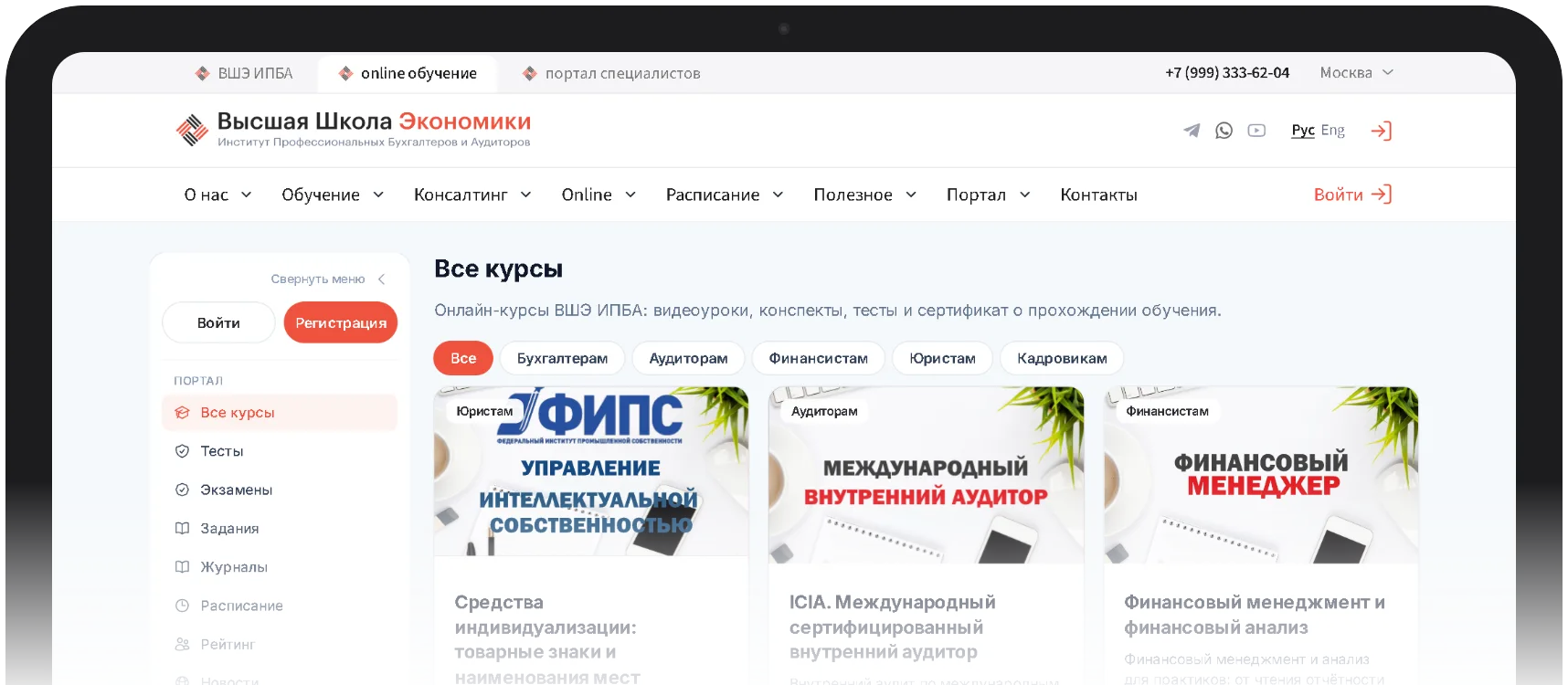
Личный кабинет с понятным интерфейсом: управляйте обучением, следите за прогрессом и общайтесь с преподавателями в одном месте.
Все лекции, презентации и задания в одном месте
Календарь с напоминаниями о ближайших занятиях
Успеваемость и выполненные задания
Смотрите лекции в удобное время
No. The course is designed for lawyers: you work with AI through the regular interface of the services — prompts, documents, templates. Confident computer skills are enough.
Mainly Russian services available without restrictions — GigaChat, YandexGPT (Alice) and others — as well as AI features of legal reference systems. Foreign models are covered separately, with caveats about availability in Russia and the risks of transferring data abroad.
Only in compliance with the law and confidentiality obligations. The course covers which data must not be sent to external services (personal data, trade secrets, attorney–client privilege), how to anonymise documents and when a corporate service is needed. Only anonymised materials are used in class.
Not without verification. AI may cite a non-existent case or an outdated version of a law. The course teaches you to use AI for initial research and structuring, and to check every reference against the original source.
36 academic hours, about 6 weeks with 2 sessions a week. Training is online and in person according to the schedule; corporate groups can be arranged on agreed dates.
After defending the final project, participants receive an HSE IPAA certificate of completion.
39 000 ₽
Installments for 12 months
Generative AI can already read long documents, summarise them, spot differences between versions, suggest wording and draft letters and court documents. For a lawyer, this means less routine work and more time for legal strategy, negotiations and clients. But AI makes mistakes with confidence: it may cite a non-existent case or an outdated version of a law. That is why the course does not just teach you to "ask a chatbot" — it shows how to build AI into your work so that every result can be verified and you can stand behind it.
Classes use Russian services — GigaChat, YandexGPT (Alice) and other models available in Russia — as well as the AI features of legal reference systems. Foreign models (ChatGPT, Claude, Gemini and others) are discussed separately: their capabilities, access restrictions in Russia and the legal risks of transferring data abroad. Participants learn to choose a tool based on the task and confidentiality requirements, not on hype.
The quality of the answer depends on how the task is set. We cover the structure of a prompt: role, context, source documents, task, output format and constraints. Participants build their own library of templates for typical tasks — contract review, comparing versions, drafting a claim, summarising case law — and learn to work with long documents in parts, refine and double-check answers.
Most of the course is hands-on work with anonymised documents. Contract review: essential terms, risks for a party, imbalances in liability, a protocol of disagreements. Case law: using AI for initial research and structuring positions — and why every reference must be checked against the original source and a legal reference system. Drafting: claims, replies to requests, draft statements of claim and responses, business letters — AI prepares the draft, while the final text and responsibility remain with the lawyer.
When reviewing a company or a transaction, a lawyer works with dozens or hundreds of documents. We show how AI can help structure a data room, extract key contract terms into a table, compile a risk register and prepare conclusions for the report — and how to organise sample checks so that no AI error makes it into the final opinion.
A separate module covers the legal framework: personal data under Federal Law 152-FZ (including cross-border transfer), trade secrets, attorney–client privilege and confidentiality agreements. We discuss who owns rights to text created with AI, how to draft an internal AI-use policy for a legal department and where professional responsibility lies.
The course is 36 academic hours: instructor-led sessions, workshops and a final project based on a task from your own practice (using anonymised data). Training is available online and in person; groups are formed according to the schedule, and corporate groups are possible for companies. After the final project, participants receive an HSE IPAA certificate. To enrol, submit a request on the website or contact us via the Contacts page.
Our specialists will help you choose a program for your goals and answer all your questions. The consultation is free!


