 HSE IPAA



Corporate Law
A two-day seminar for corporate lawyers: changes in corporate legislation, case law, and support for corporate transactions
 2 days
 5 modules
 HSE IPAA certificate of completion
44 500 ₽
/course
35 000 ₽
/course

0
About the seminar
Legislation on legal entities changes regularly, and case law on corporate disputes evolves quickly. The seminar reviews key changes, practice trends and typical mistakes.

Gaps and contradictions in current rules

Court and enforcement practice in corporate disputes

Consistent approaches to the company's internal corporate work
What you will gain
 A structured update of your corporate law knowledge
An understanding of the latest changes in legislation on legal entities
Ready-made approaches to real corporate situations
A review of typical mistakes in transaction support
Knowledge of ways to resolve corporate disputes
A comparative analysis of the legal status of LLCs and JSCs
HSE IPAA certificate of completion
A structured update of your corporate law knowledge
An understanding of the latest changes in legislation on legal entities
Ready-made approaches to real corporate situations
A review of typical mistakes in transaction support
Knowledge of ways to resolve corporate disputes
A comparative analysis of the legal status of LLCs and JSCs
HSE IPAA certificate of completion
Program advantages
The seminar is built on hands-on experience supporting corporate transactions and procedures

Practical focus
Analysis of real situations and solutions that comply with current legislation

Up to date
Review of the latest changes in corporate legislation and recent case law

Comprehensive
From general provisions on legal entities to securities, the specifics of LLCs and JSCs, and corporate disputes
Who it suits and what you need
The program is designed for lawyers who handle a company's internal corporate work

Legal education
Basic knowledge of Russian civil and corporate legislation

Corporate work experience
Preparing documents for general meetings and the board of directors (supervisory board)

2 days of classes
The seminar runs over two days

Readiness for practice
Active participation in case analysis and discussion of solutions
Who this seminar is for
In-house corporate lawyers
Lawyers handling internal corporate work
Specialists in general meeting of members documents
Specialists in general meeting of shareholders documents
Corporate secretaries and board secretaries
Lawyers supporting corporate transactions
Heads of legal departments
Program content
Two days of classes: from general provisions on legal entities to the specifics of LLCs and JSCs, antitrust control and corporate disputes

2
days of training

5
program modules

LLC & JSC
comparative analysis
- Charters and model charters, charter capital requirements, commercial and non-profit organizations, the issue of affiliation, public and non-public joint-stock companies, reorganization and liquidation, legal forms of non-profit organizations
- The concept and purpose of corporate governance and its importance for owners and the company, public and non-public companies, the agency conflict, international models and Russian specifics, corporate governance codes, the system of internal documents
- Governance models for a joint-stock company, competence and authority of bodies, single-shareholder companies, board composition and structure, independent directors, rights and liability of board members, organizing the board's work, evaluation and remuneration
- Overview of the Russian Civil Code and the Federal Law “On the Securities Market”: general provisions, uncertificated securities, liability for the validity of rights, transfer of rights and encumbrances, protection, restoration and recovery of securities
- Establishing an LLC and its charter, rights and obligations of members, expulsion and withdrawal of a member, contributions to property, transfer of an interest and the pre-emptive right of purchase, inheritance of an interest, LLC governing bodies, the board of directors, the management company
- Comparison of the legal status of LLCs and JSCs under Russian law, property relations between the corporation and its members, bodies exceeding their authority, spousal consent to the disposal of an interest, parent–subsidiary relations, liability for debts
- Affiliated persons and groups of persons, control of economic concentration by the antitrust authority, control of transactions with interests and shares under Russian competition law
- Corporate disputes under the Russian Arbitrazh Procedure Code, jurisdiction of arbitrazh courts and arbitration clauses, exclusive and contractual jurisdiction, preparing documents for court, interim measures
Course price
35 000 ₽

Learn now, pay later!
4 265
₽/mo
3 354
₽/mo
Installments for 12 months
15%
Enroll in the course or get a free consultation
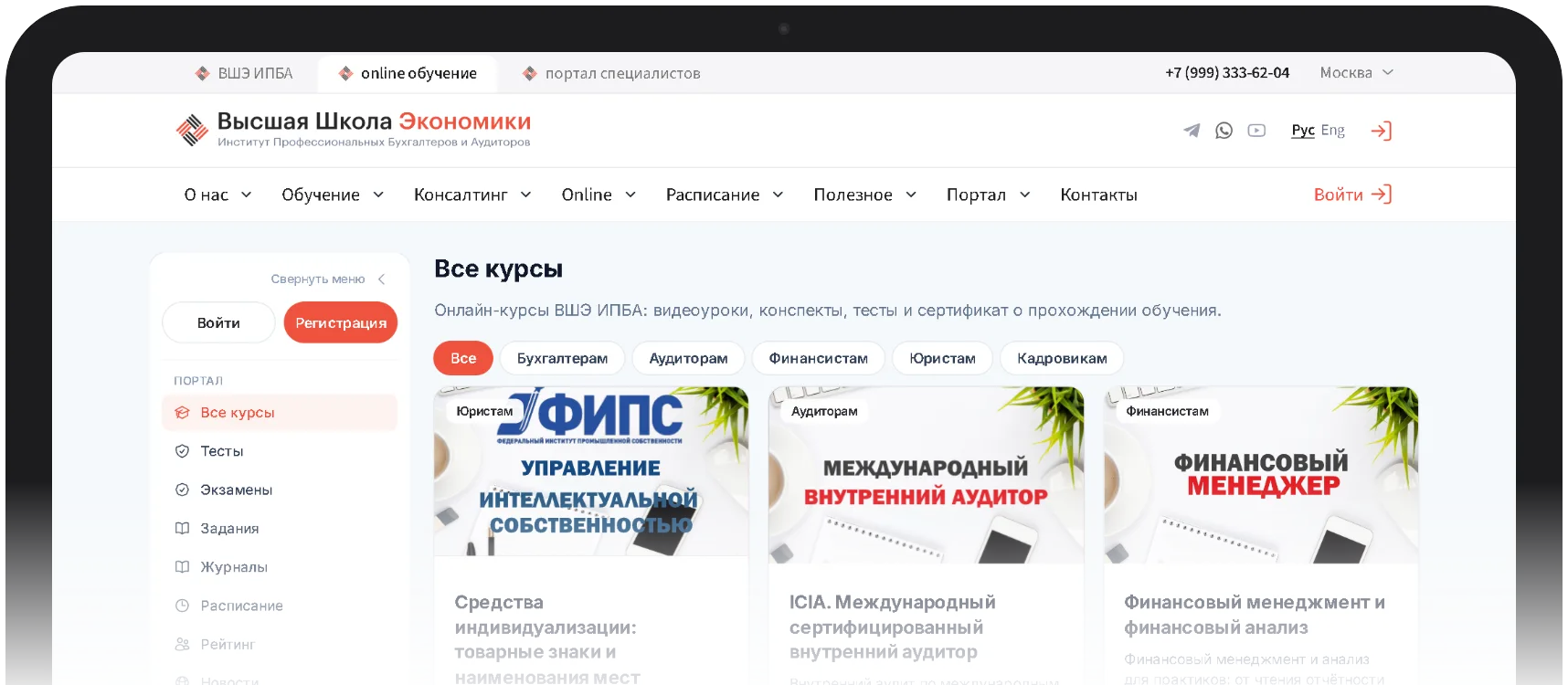
Удобная платформа для обучения
Личный кабинет с понятным интерфейсом: управляйте обучением, следите за прогрессом и общайтесь с преподавателями в одном месте.
Учебные материалы
Все лекции, презентации и задания в одном месте
Расписание занятий
Календарь с напоминаниями о ближайших занятиях
Прогресс
Успеваемость и выполненные задания
Видеолекции
Смотрите лекции в удобное время
Frequently Asked Questions
When are classes held?
Groups start as soon as enough participants enroll, and class times are agreed with the participants. Online courses can be taken at any convenient time in the Online Learning section.
How much does training cost?
The price of each course is listed in the schedule. Terms for corporate groups are discussed separately.
Who teaches the classes?
Instructors with extensive practical and academic experience; many of them hold professional certifications, academic degrees and titles.
Where does training take place?
In our classroom in Moscow, at the client’s premises, or online in the Online Learning section.
Can I study from another city?
Yes. Online courses are available from any region of Russia: lectures, materials and tests are gathered in your personal account in the Online Learning section.
How long does a course last?
It depends on the program: the duration is shown on each course page in the catalog. For online courses, the duration is shown to the minute.
Course price
35 000 ₽
Learn now, pay later!
4 265
₽/mo
3 354
₽/mo
Installments for 12 months
15%
Enroll in the course or get a free consultation
A two-day seminar for corporate lawyers who handle a company's internal corporate affairs.
Who it is for
In-house lawyers responsible for the documents of general meetings of members and general meetings of shareholders and of the board of directors (supervisory board), and for supporting corporate procedures and transactions.
Why this seminar
Legislation on legal entities changes regularly, and case law on corporate disputes evolves quickly. Approaches to supporting corporate transactions and procedures are changing as well. The seminar reviews key changes in corporate legislation, major trends in case law and practical problems, and discusses possible solutions and typical mistakes. It helps participants update and deepen their knowledge of corporate law in a structured way.
Seminar objectives
- study new provisions of Russian civil and corporate legislation, as well as gaps and contradictions in current rules;
- find lawful and practically applicable solutions to real corporate situations;
- analyze court decisions and other enforcement practice on the subject;
- expand knowledge of corporate law and corporate relations;
- streamline approaches to the company's internal corporate work and to resolving corporate disputes.
Program content
Day 1
Module 1. General provisions on legal entities
- Charter of a legal entity, model charters
- Requirements for charter capital
- Commercial and non-profit organizations
- The issue of affiliation
- Public and non-public joint-stock companies
- Reorganization of legal entities
- Liquidation of legal entities
- The system of legal forms of non-profit organizations
Module 2. Corporate governance: general provisions
- The concept and purpose of corporate governance and its importance for owners, the company and other stakeholders. Public and non-public companies.
- Relations between owners and management: the agency conflict.
- International models of corporate governance and the specifics of corporate governance in Russia. The international and Russian regulatory framework: regulatory trends, corporate governance codes, and requirements for companies in this area.
- The system of a company's internal corporate documents.
Module 3. The board of directors as the core of corporate governance
- The concept and features of a body of a joint-stock company.
- Governance models for a joint-stock company.
- "Competence," "authority" and "function" in joint-stock company legislation: how the concepts relate.
- Legal techniques and procedure for defining the competence of a joint-stock company's governing bodies.
- Transferring matters from the competence of one governing body to another: practice.
- Governing bodies in companies with a single member (shareholder).
- The general meeting of shareholders, the board of directors (supervisory board) and executive bodies: powers, liability, and current regulatory issues in theory and practice.
- The purpose and functions of the board of directors; board models.
- Composition and structure of the board: executive, non-executive and independent directors; requirements considered when assessing the quality of corporate governance.
- Rights, duties and liability of board members; liability insurance.
- The role of the chair of the board of directors.
- Organizing the board's work; the work plan.
- Interaction between the board and management; dividing competence between the board of directors and the collegial executive body.
- Evaluation and remuneration of board members.
Module 4. Securities as objects of civil rights. Overview of the Russian Civil Code and the Federal Law “On the Securities Market”
- General provisions on securities
- Uncertificated securities
- Liability for the validity of rights under a security
- Transfer of rights to securities and creation of encumbrances
- Protection of the violated rights of rightholders
- Restoration of rights under securities
- Recovery of uncertificated securities
Day 2
Module 5. Corporate law in LLCs and JSCs
Establishing an LLC: the incorporation procedure and the charter.
Rights and obligations of LLC members
- Core and additional rights and obligations of a member
- Expulsion of a member from the company
- Withdrawal of a member from the company
- Contributions to the company's property
Transfer of an interest (part of an interest) in an LLC's charter capital to other members and third parties
- Sale or other disposal of an interest (part of an interest) to another member (members) of the company
- Sale or other disposal of an interest (part of an interest) to third parties
- Mechanisms for exercising the pre-emptive right of members and the company to purchase an interest
- Transfer of an interest by inheritance, universal succession and on other legal grounds
Governing bodies of an LLC
- Choosing a governance model
- Types of governing bodies and how they are formed
- Governing bodies in a single-member company
- Procedure for defining the competence of governing bodies
- The general meeting of members: organizing its work and adopting resolutions
- The company's board of directors (supervisory board)
- Sole and collegial executive bodies
- Management company (manager): theory and practice
Workshop: comparative analysis and contentious issues
- Comparison of the legal status of LLCs and JSCs under Russian law (securities market regulation is not covered in this block)
- Property relations between a corporation and its members (shareholders), and among the members themselves
- Competence of corporate bodies and the consequences of bodies (usually executive ones) exceeding their authority
- Procedure for a member's disposal of an interest in the charter capital
- Spousal consent to the disposal of an LLC interest or JSC shares
- Corporate relations between parent and subsidiary companies: management and liability
- Limits of liability of LLC members and JSC shareholders for the company's debts
- Decision-making by the corporation's supreme body, including when increasing an LLC's charter capital
- Corporate raiding and ways to protect against it
Module 6. Antitrust control in corporate law
Affiliated persons and groups of persons. Control of economic concentration by the antitrust authority. Control of transactions with interests in charter capital and shares under Russian competition law.
Module 7. Procedural aspects of hearing corporate disputes
- Corporate disputes under the Russian Arbitrazh Procedure Code: jurisdiction of arbitrazh (commercial) courts and resolution of disputes by arbitral tribunals; arbitration clauses in a legal entity's charter and contracts
- Jurisdiction over corporate disputes: exclusive and contractual jurisdiction, attempts to artificially change jurisdiction
- Preparing documents for court
- Interim measures in corporate disputes
Not sure which program to choose?
Our specialists will help you choose a program for your goals and answer all your questions. The consultation is free!
Reach us in one click: call us.
+7 (999) 333-62-04
contact us via messengers


