 HSE IPAA



Bankruptcy and Rehabilitation Procedures
A practical course on Russian bankruptcy law
 3 program blocks
 Practical sessions and case law
 HSE IPAA certificate of completion
33 500 ₽
/course
26 000 ₽
/course

0
Course objective
The course provides up-to-date knowledge of bankruptcy and solvency restoration procedures under Russian law and helps you understand the nuances of applying them in practice.

Recent changes in bankruptcy legislation

Financial recovery and external administration

The bankruptcy procedure from petition to completion
What the course covers
 Indicators of bankruptcy and grounds for applying to the arbitrazh court
Consequences of introducing bankruptcy procedures
The register of creditors’ claims and review of claims
Analysis of the debtor’s financial position
Rights, duties and remuneration of the insolvency practitioner
Ranking of creditors’ claims
Subsidiary liability of persons controlling the debtor
Indicators of bankruptcy and grounds for applying to the arbitrazh court
Consequences of introducing bankruptcy procedures
The register of creditors’ claims and review of claims
Analysis of the debtor’s financial position
Rights, duties and remuneration of the insolvency practitioner
Ranking of creditors’ claims
Subsidiary liability of persons controlling the debtor
Practical focus
The program is based on current case law and real procedures.

Practical sessions
Solvency analysis and identifying signs of bankruptcy.

Case law
Analysis of disputes over challenged transactions and subsidiary liability.

Up to date
Reflects the latest changes in Russian bankruptcy legislation.
Participants in the procedure
The course explains the role of each participant in a bankruptcy case.

Debtor
Legal status, interested and affiliated persons under bankruptcy legislation.

Court
Powers of the arbitrazh court in a bankruptcy case.

Insolvency practitioner
Appointment, functions, rights, duties and remuneration.

Creditors
Creditors’ meeting and committee: convening, holding and decision-making.
Who this training is for
Insolvency practitioners and their assistants
In-house counsel
CFOs
Accountants
Creditors and their representatives
Company executives and founders
Distressed debt specialists
Training program
Three blocks: an introduction, the main part on rehabilitation procedures and bankruptcy, and conclusions.

3
program blocks

2
groups of procedures

online
class format
- Significance, aims and objectives of the procedures, recent changes in Russian bankruptcy legislation.
- Financial recovery and external administration: grounds, specifics, plans, debt restructuring, settlement agreement, sale of the business.
- Indicators of bankruptcy, applying to the arbitrazh court, hearing the case, consequences of introducing procedures, register of creditors’ claims.
- Analysis of the financial position by the interim manager, workshop on assessing solvency and identifying signs of bankruptcy.
- Inventory, valuation and sale of assets at auction, current payments, ranking of claims, costs of the procedures.
- Deliberate bankruptcy, challenging transactions, subsidiary liability, taxation, the bankruptcy trustee’s report.
Course price
26 000 ₽

Learn now, pay later!
3 210
₽/mo
2 492
₽/mo
Installments for 12 months
15%
Enroll in the course or get a free consultation
Удобная платформа для обучения
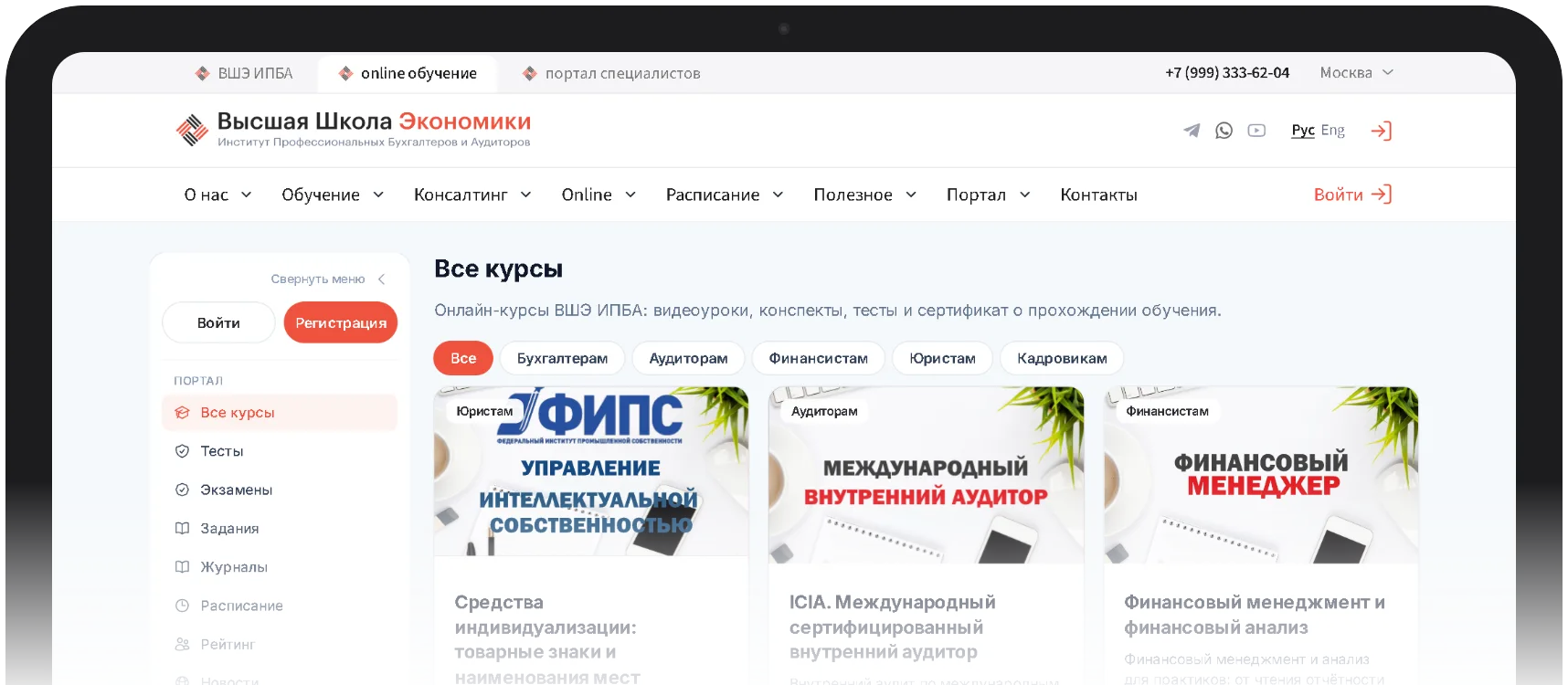
Личный кабинет с понятным интерфейсом: управляйте обучением, следите за прогрессом и общайтесь с преподавателями в одном месте.
Учебные материалы
Все лекции, презентации и задания в одном месте
Расписание занятий
Календарь с напоминаниями о ближайших занятиях
Прогресс
Успеваемость и выполненные задания
Видеолекции
Смотрите лекции в удобное время
FAQ: Bankruptcy and Rehabilitation Procedures
Who is the Bankruptcy and Rehabilitation Procedures course for?
Insolvency practitioners and their assistants, lawyers, CFOs, accountants, creditors and their representatives, as well as company executives and founders who need to understand bankruptcy procedures.
What does the program cover?
Three blocks: an introduction and recent legislative changes; the main part, covering rehabilitation procedures, the bankruptcy procedure, case participants, the debtor’s assets, challenging transactions and subsidiary liability; and conclusions with a discussion of questions.
Are there practical sessions?
Yes. The program includes a workshop on solvency analysis and identifying signs of bankruptcy, as well as a review of case law on challenging transactions and subsidiary liability.
How long is the training and what is the format?
The program consists of three blocks; classes are held online. Upcoming dates are listed in the Schedule section.
What document do I receive after the training?
On completion of the course you receive an HSE IPAA certificate of completion.
Course price
26 000 ₽
Learn now, pay later!
3 210
₽/mo
2 492
₽/mo
Installments for 12 months
15%
Enroll in the course or get a free consultation
Course objective
To provide up-to-date knowledge of bankruptcy and debtor solvency restoration procedures under Russian law (Federal Law No. 127-FZ “On Insolvency (Bankruptcy)”), taking into account established case law.
Goals
To broaden general knowledge of bankruptcy and examine the practical nuances of rehabilitation procedures (financial recovery and external administration) as well as bankruptcy liquidation proceedings.
Block 1. Introduction
- The significance, aims and objectives of bankruptcy and solvency restoration procedures
- Recent changes in bankruptcy legislation
Block 2. Main part
Rehabilitation procedures
- Financial recovery and external administration: overview, grounds for introduction, procedural specifics, the financial recovery plan and the external administration plan
- Measures to restore the debtor’s solvency: debt restructuring, settlement agreement, sale of the debtor’s business
Bankruptcy procedure
- Indicators of bankruptcy. Mandatory payments as grounds for the authorized body to file a bankruptcy petition
- Grounds and procedure for applying to the arbitrazh (commercial) court
- Hearing of bankruptcy cases in the arbitrazh court
- Consequences of introducing bankruptcy procedures
- Legal regime of the debtor’s contracts
- Register of creditors’ claims: compilation, publication of information, amendments, review of claims
- Analysis of the debtor’s financial position by the interim manager
- Workshop: solvency analysis, identifying signs of potential bankruptcy
- Time limits of bankruptcy procedures
Participants in a bankruptcy case
- Legal status of the debtor. Interested and affiliated persons under bankruptcy legislation
- Powers of the arbitrazh court
- Insolvency practitioner (interim, administrative, external, bankruptcy trustee): appointment, removal and release, rights, duties, remuneration. Interaction with tax authorities
- Analysis of the debtor’s financial and business activities
- Creditors
- Creditors’ meeting: procedure for convening, holding and making decisions
- Creditors’ committee: formation, procedures and decision-making
- The authorized body in bankruptcy cases: competence and practice
The debtor’s assets
- Bankruptcy estate. Inventory and valuation of assets. Sale of assets at auction
- Current payments and the ranking of creditors’ claims, settlement procedure
- Costs of bankruptcy procedures
Key areas of work in bankruptcy proceedings
- Identifying signs of deliberate and fictitious bankruptcy
- Challenging the debtor’s transactions and returning assets to the bankruptcy estate. Case law
- Subsidiary liability of persons controlling the debtor: founders, managers, officers. Case law
- Taxation in bankruptcy procedures
- Interaction of the insolvency practitioner with the bailiff service
- Managing accounts receivable: pre-trial and court stages. Procedural specifics of bankruptcy cases and separate disputes
- The bankruptcy trustee’s report and completion of bankruptcy proceedings
- Discharge from obligations and repayment of creditors’ claims by third parties
Block 3. Conclusions
- Summary
- Answers to participants’ questions and discussion
Not sure which program to choose?
Our specialists will help you choose a program for your goals and answer all your questions. The consultation is free!
Reach us in one click: call us.
+7 (999) 333-62-04
contact us via messengers


