 HSE IPAA



Intellectual Property Law
Trademarks, patents, computer programs and transactions with exclusive rights
 Lectures and case law analysis
 5 thematic blocks
 HSE IPAA certificate of completion
36 000 ₽
/course
28 000 ₽
/course

0
What this course is about
The program covers the latest changes to intellectual property legislation, approaches to interpreting them and how they are applied in practice. Participants put their questions to practicing experts.

Patent law and rights to inventions

Rights to computer programs and circuit layouts

Transactions and contracts involving exclusive rights
What you will cover
 Types of trademarks and terms of legal protection
Trademark similarity disputes in case law
Registration refusals, trademark priority and filing oppositions
Patentability requirements and terms of protection
Employee inventions and remuneration of inventors
Protection of industrial designs and utility models
Commercial concession, pledge and trust management agreements
Types of trademarks and terms of legal protection
Trademark similarity disputes in case law
Registration refusals, trademark priority and filing oppositions
Patentability requirements and terms of protection
Employee inventions and remuneration of inventors
Protection of industrial designs and utility models
Commercial concession, pledge and trust management agreements
Training format
The course is taught by practicing experts working in intellectual property.

Legislative changes
We examine the latest amendments and approaches to interpreting them.

Real-world practice
We draw on court cases and experience applying the Russian Civil Code.

Answers to your questions
Participants discuss their situations directly with the experts.
Practical challenges
Special attention to the issues that most often give rise to disputes.

Challenging protection
Invalidating the grant of legal protection.

Mistakes in applications
Common drafting mistakes and the role of the patent attorney.

Secret inventions
Specifics of legal protection and use.

International treaties
Application of international treaties in intellectual property.
Who the training is for
In-house lawyers
Patent attorneys
Trademark specialists
IT companies and developers
Rights holders and authors
Business executives
Licensing specialists
Training program
Five blocks — from means of individualization to transactions with exclusive rights.

5
program blocks

4
types of contracts

online
class format
- Types of trademarks, terms of protection, well-known trademarks, appellations of origin.
- Similarity of goods, distinctiveness, registration refusals, priority and oppositions.
- Patentability requirements, employee inventions, grant and challenge of a patent, industrial designs and utility models.
- Scope of copyright, protection of software products, free use, disposal of rights, know-how and domain names.
- Alienation of an exclusive right, license and sublicense agreements, compulsory licenses, commercial concession.
- Pledge, trust management, contribution of rights to charter capital, documenting rights in supply and work contracts.
Course price
28 000 ₽

Learn now, pay later!
3 450
₽/mo
2 683
₽/mo
Installments for 12 months
15%
Enroll in the course or get a free consultation
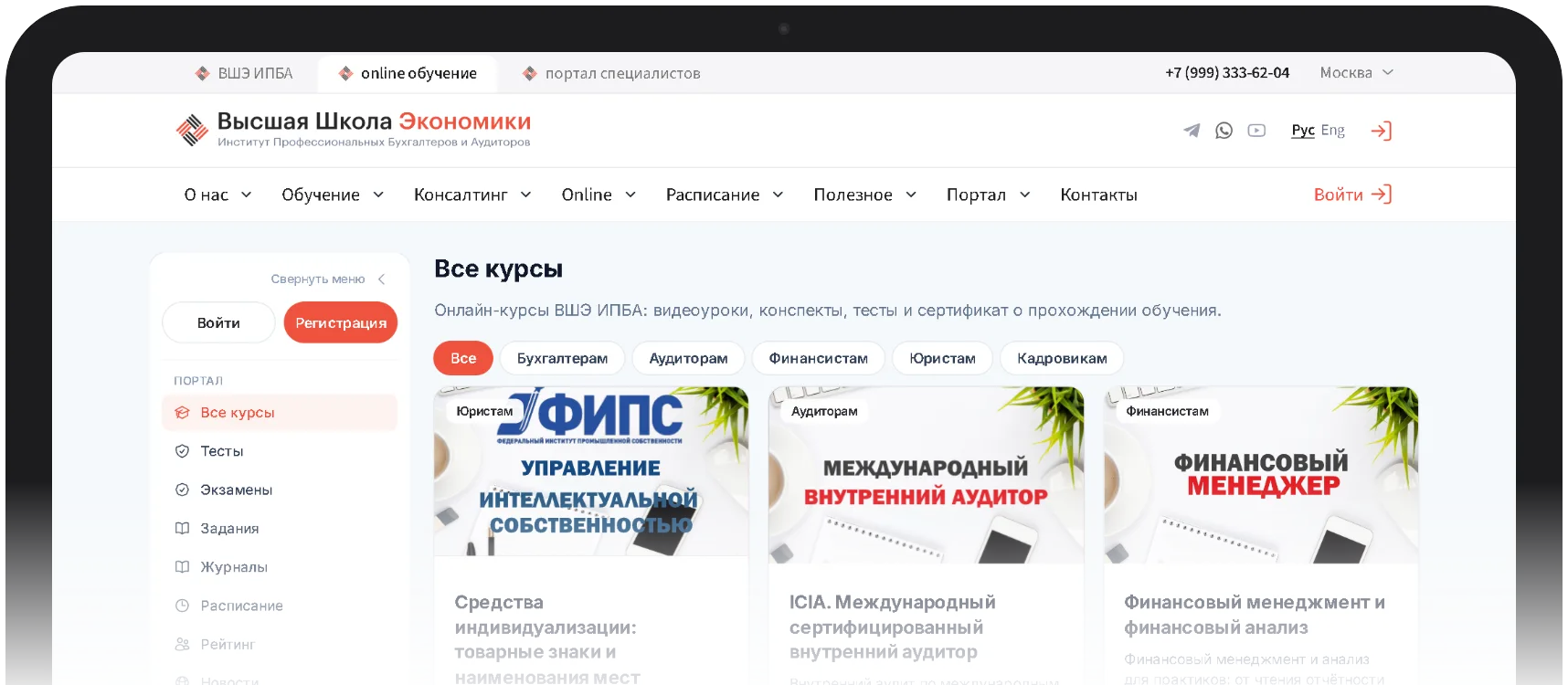
Удобная платформа для обучения
Личный кабинет с понятным интерфейсом: управляйте обучением, следите за прогрессом и общайтесь с преподавателями в одном месте.
Учебные материалы
Все лекции, презентации и задания в одном месте
Расписание занятий
Календарь с напоминаниями о ближайших занятиях
Прогресс
Успеваемость и выполненные задания
Видеолекции
Смотрите лекции в удобное время
FAQ: Intellectual Property Law course
Who is the Intellectual Property Law course for?
In-house lawyers, patent attorneys, trademark and licensing specialists, IT companies, authors and rights holders — anyone who works with intellectual property.
What does the course program cover?
Trademarks and other means of individualization, patent law, computer programs, know-how, domain names and transactions with exclusive rights: alienation, licenses, commercial concession, pledge.
Are there practical sessions?
Yes. The theory is examined through examples from case law and real-world situations, and participants can ask questions about their own cases.
How long is the training and what is the format?
The program consists of five thematic blocks, combining lectures with case law analysis. Classes are held online.
What document do I receive after the training?
Upon completion of the course, you receive an HSE IPAA certificate of completion.
Course price
28 000 ₽
Learn now, pay later!
3 450
₽/mo
2 683
₽/mo
Installments for 12 months
15%
Enroll in the course or get a free consultation
About the course
The main source of intellectual property regulation in Russia is Part Four of the Russian Civil Code. The course covers the latest legislative changes and approaches to interpreting them, the practice of applying the rules and new solutions to long-standing problems. Participants can put their questions to practicing experts working in intellectual property.
HSE IPAA develops its intellectual property programs in partnership with FIPS, the Federal Institute of Industrial Property (FGBU FIPS).
Program
1. Legal protection of means of individualization of goods, works and services
Application of trademark law in practice: types of trademarks, term of legal protection, protection of well-known trademarks. Disputes over conflicts between trademarks and other means of individualization: similarity of goods, distinctiveness of designations. Trademark registration: grounds for refusal, priority, filing oppositions. Case law. Challenging and invalidating the grant of legal protection. Protection of appellations of origin. Application of international treaties.
2. Patent law
Legal regime of an invention: patentability requirements, terms of protection. Relations with inventors: employee inventions, payment of remuneration. Grant and challenge of a patent: the role of the patent attorney, mistakes in drafting applications, grounds for refusal, provisional legal protection, invalidation of a patent. Protection and use of secret inventions. Protection of industrial designs and utility models. Application of international treaties.
3. Rights to computer programs and integrated circuit layouts
Scope of copyright in software, protection and enforcement of rights in software products. Cases of free use of computer programs. Rights to programs created on commission and in the course of employment. Disposal of rights to computer programs. Fundamentals of the legal regulation of integrated circuit layouts.
4. Protection of other intellectual property
Use of intellectual property on the internet and the legal regime of domain names. Protection of rights to trade secrets (know-how), conditions for classifying information as know-how under the Russian Civil Code. Protection and enforcement of rights to a company name.
5. Intellectual property transactions
Procedure for disposing of exclusive rights and transfer of exclusive rights. Open license as a public offer. Granting third parties the right of use free of charge.
Contract for the alienation of an exclusive right: execution, methods of setting the price and payment terms, essential terms, consequences of breach, return of the exclusive right in the event of a material breach by the acquirer.
License agreement: execution, types of licenses, exclusive and non-exclusive licenses, sublicense agreements, compulsory licenses, protection of the parties’ rights in the event of breach, material breach as grounds for termination.
Commercial concession agreement (franchising): practical issues in concluding the agreement, specific terms depending on the rights transferred.
Other transactions: pledge of exclusive rights, trust management, contribution of rights to charter capital. Documenting rights to intellectual property in supply, work and other civil-law contracts.
Upcoming dates are in the /schedule section; other programs for lawyers are in the /programs section.
Not sure which program to choose?
Our specialists will help you choose a program for your goals and answer all your questions. The consultation is free!
Reach us in one click: call us.
+7 (999) 333-62-04
contact us via messengers


