 HSE IPAA



Anti-Corruption Compliance
Organizing and running an anti-corruption compliance function in a company
 Seminar
 Practical recommendations and case studies
 HSE IPAA certificate
28 000 ₽
/course
22 000 ₽
/course

0
Why compliance matters
Corporate ethics, integrity and social responsibility have become especially important for business. The compliance function ensures adherence to anti-corruption requirements and protects the company's reputation.

Anti-corruption legal requirements

Setting up a compliance unit

The compliance program and its elements
What you will gain from the seminar
 Practical knowledge of how to organize a compliance function
An understanding of compliance risk management in an organization
Recommendations on implementing a compliance function
Knowledge of the elements of a compliance program
Tools: third-party due diligence and the hotline
Answers to questions about compliance management in the real economy
An overview of changes in anti-corruption legislation
Practical knowledge of how to organize a compliance function
An understanding of compliance risk management in an organization
Recommendations on implementing a compliance function
Knowledge of the elements of a compliance program
Tools: third-party due diligence and the hotline
Answers to questions about compliance management in the real economy
An overview of changes in anti-corruption legislation
Why it matters now
Market expectations are changing: investors, partners and consumers choose companies based on their ethical reputation.

Legal requirements
Law 273-FZ requires organizations to take measures to prevent corruption.

Reputation protection
Failing to meet declared standards exposes the organization to significant risks.

International standards
We cover the FCPA, the UK Bribery Act and the Russian Law “On Combating Corruption.”
Seminar target audience
The program is designed for managers and specialists responsible for control and security.

Executives
Senior and middle management of companies and financial institutions.

Internal control
Heads and specialists of internal control units.

Economic security
Economic security specialists.

Compliance and legal
Compliance specialists and in-house lawyers.
Who the training is for
Senior managers
Middle managers
Financial institution staff
Internal control units
Economic security departments
Compliance specialists
In-house lawyers
Seminar program
From the regulatory framework to the practical tools of a compliance program.

5
reasons to attend

5
compliance program elements

2
key tools
- International and Russian regulatory documents: the FCPA, the UK Bribery Act, the Federal Law “On Combating Corruption.”
- Recent changes in anti-corruption legislation.
- The unit's objectives and procedures, the compliance manager's functions, interaction with other units.
- “Tone at the top,” identifying regulatory requirements, risk assessment, control procedures, communications, investigations.
- The hotline and third-party due diligence.
- Compliance reporting and discussion of the outlook for the function.
Course price
22 000 ₽

Learn now, pay later!
2 683
₽/mo
2 108
₽/mo
Installments for 12 months
15%
Enroll in the course or get a free consultation
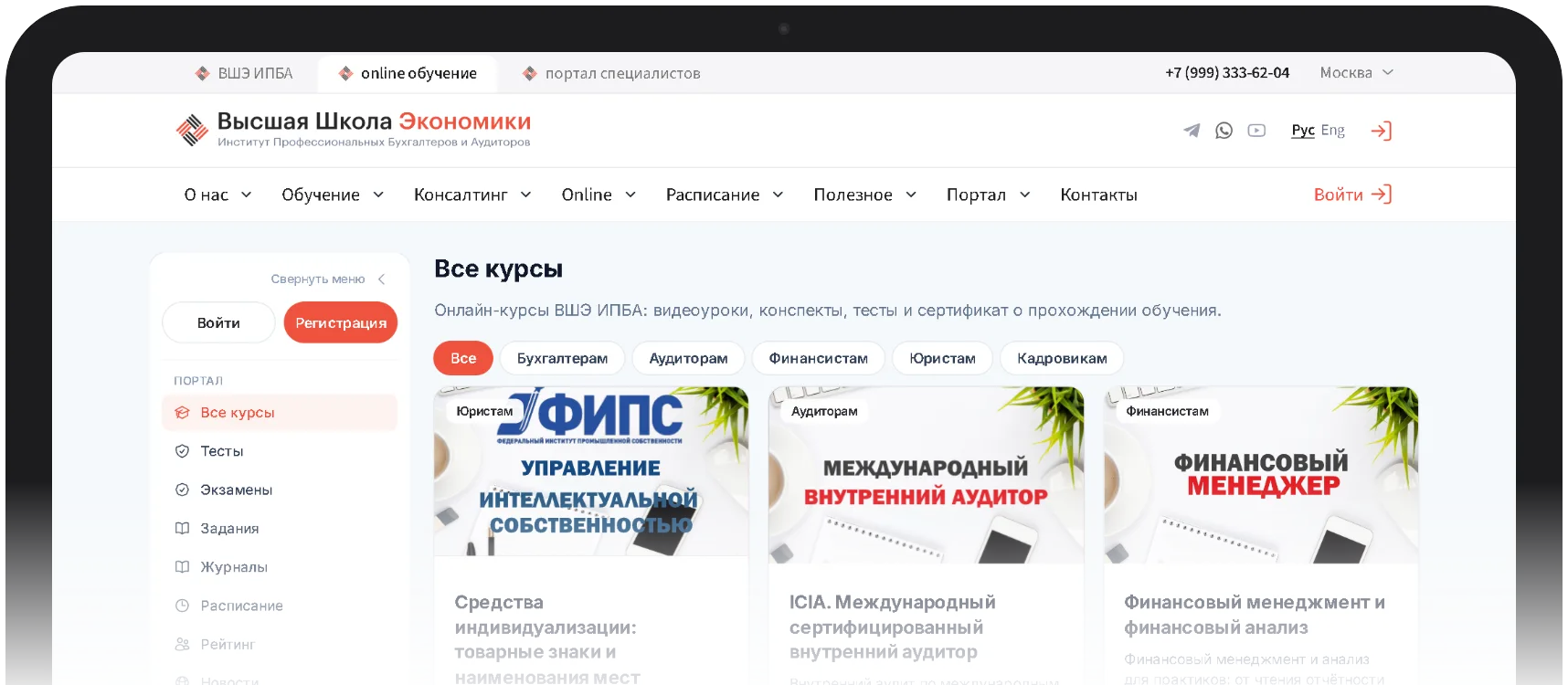
Удобная платформа для обучения
Личный кабинет с понятным интерфейсом: управляйте обучением, следите за прогрессом и общайтесь с преподавателями в одном месте.
Учебные материалы
Все лекции, презентации и задания в одном месте
Расписание занятий
Календарь с напоминаниями о ближайших занятиях
Прогресс
Успеваемость и выполненные задания
Видеолекции
Смотрите лекции в удобное время
Frequently Asked Questions
When are classes held?
Groups start as soon as enough participants enroll, and class times are agreed with the participants. Online courses can be taken at any convenient time in the Online Learning section.
How much does training cost?
The price of each course is listed in the schedule. Terms for corporate groups are discussed separately.
Who teaches the classes?
Instructors with extensive practical and academic experience; many of them hold professional certifications, academic degrees and titles.
Where does training take place?
In our classroom in Moscow, at the client’s premises, or online in the Online Learning section.
Can I study from another city?
Yes. Online courses are available from any region of Russia: lectures, materials and tests are gathered in your personal account in the Online Learning section.
How long does a course last?
It depends on the program: the duration is shown on each course page in the catalog. For online courses, the duration is shown to the minute.
Course price
22 000 ₽
Learn now, pay later!
2 683
₽/mo
2 108
₽/mo
Installments for 12 months
15%
Enroll in the course or get a free consultation
Anti-Corruption Compliance
Corporate ethics, integrity and social responsibility are now especially important to organizations. Owners and executives understand that a company performs better when a compliance culture, in the broadest sense, has been built and embraced.
External expectations are changing too. Shareholders, investors, employees, consumers and civil society organizations increasingly favor companies with clear values and a reliable, ethical reputation. Many organizations position themselves as ethical brands, and the compliance function helps ensure that the declared standards are met. Failing to meet them exposes the organization to significant risks.
Corruption risk is one of the main reasons investors and partners are cautious. In response, organizations develop and implement anti-corruption compliance programs, and the compliance function ensures adherence to anti-corruption legislation and other regulatory requirements.
In Russia, the obligation of organizations to take measures to prevent corruption is established by Federal Law No. 273-FZ “On Combating Corruption,” so a well-built compliance system is needed not only by large companies but by businesses of any size.
Compliance as a business culture
New regulatory requirements and market expectations show that ethical business conduct and reputation protection are becoming a condition of competitiveness. The compliance function ensures adherence to anti-corruption requirements.
Seminar objective
To give participants practical knowledge of how to organize and run an anti-corruption compliance function in an organization.
5 reasons to attend the seminar
- Learn Russian practice in managing compliance risks in organizations.
- Get practical recommendations on implementing a compliance function.
- Understand what a compliance program is and what elements it consists of.
- Master third-party due diligence and the hotline as the main tools of a compliance program.
- Get answers to your questions about compliance management in the real economy.
Who it is for
- Senior and middle managers of companies and financial institutions.
- Heads and specialists of internal control and economic security units.
- Heads of compliance units, compliance specialists, lawyers.
Seminar program
- International and Russian regulatory documents on compliance and anti-corruption: the FCPA, the UK Bribery Act, the Federal Law “On Combating Corruption” and others.
- Recent changes in anti-corruption legislation.
- Setting up a compliance unit in an organization:
- the unit's objectives and the procedures for achieving them;
- the functions and job responsibilities of a compliance manager;
- interaction with other units within the key components of the compliance system;
- compliance reporting.
- The compliance program and its elements in practice:
- senior management commitment (“tone at the top”);
- identifying regulatory requirements and assessing risks;
- control procedures;
- communications;
- compliance investigations.
- The hotline as a tool for improving internal processes and engagement with stakeholders.
- Third-party due diligence.
- Questions and answers, discussion of the outlook for the compliance function.
- Wrap-up.
Not sure which program to choose?
Our specialists will help you choose a program for your goals and answer all your questions. The consultation is free!
Reach us in one click: call us.
+7 (999) 333-62-04
contact us via messengers


