 HSE IPAA



Train the Trainer
A three-day program for experienced and new business trainers: designing a training and 20 methods for delivering it
 3 days
 20 business training methods
 HSE IPAA certificate of completion
51 000 ₽
/course
40 000 ₽
/course

0
About the program
For experienced trainers, the course helps organize their knowledge and expand their set of methods. For new trainers, it covers the fundamentals of the profession: working with the client, preparing a program and managing a group.

A training program tailored to the company's objectives

Delivering a training and managing group dynamics

Working with an unmotivated or hostile group
What you will gain
 A complete picture of the business trainer profession
The ability to identify a company's training needs
Skills in writing a training program and script
Command of 20 business training methods
Tools for managing group dynamics
Techniques for handling aggression in a group
HSE IPAA certificate of completion
A complete picture of the business trainer profession
The ability to identify a company's training needs
Skills in writing a training program and script
Command of 20 business training methods
Tools for managing group dynamics
Techniques for handling aggression in a group
HSE IPAA certificate of completion
Program advantages
80% practice: an interactive methodology that keeps participants constantly engaged

80% practice
Theory and practice are balanced 20 to 80: participants try each method themselves

Interactive methodology
Mini-lectures, discussions, moderation, facilitation, case studies, role plays, video analysis, brainstorming, sharing

Full cycle
From the client interview and training program to summing up and recording results
What you will need
The program is designed for both experienced and new trainers

Interest in the profession
No special background required

3 days of participation
The program runs for three days

Readiness to practice
80% of the time is active work in groups and pairs

Openness to feedback
Video analysis and review of participants' actions
Who this program is for
Practicing business trainers
New trainers
In-house corporate trainers
HR and learning & development specialists
Heads of training centers
Facilitators and moderators
Consultants who work with groups
Course content
Day 1 — designing a training; days 2 and 3 — business training methods

3
days of training

20
business training methods

80%
practice
- Interviewing the client and clarifying goals, observing future participants at work, surveys, a program tailored to the company's request and the structure of a strong program, post-training activities
- Training script, competencies of a professional trainer, group dynamics, handling aggression in a group
- The first minutes of a training, sociometry for quick group assessment, mini-lecture: preparation, logic and structure, rhetorical techniques, facilitation and how to run it
- Group discussion and the objectives it helps achieve, moderation to build shared understanding in a group, single-element and integrated topic-based exercises
- Brainstorming to find new solutions, ready-made and custom cases, simple role plays and games with a hidden motive, instructions and analysis of participants' behavior
- Metaphorical business game and working with mindsets, pantomime, projective tests and questionnaires, sharing to balance the emotional state, closing the training and feedback
Course price
40 000 ₽

Learn now, pay later!
4 888
₽/mo
3 833
₽/mo
Installments for 12 months
15%
Enroll in the course or get a free consultation
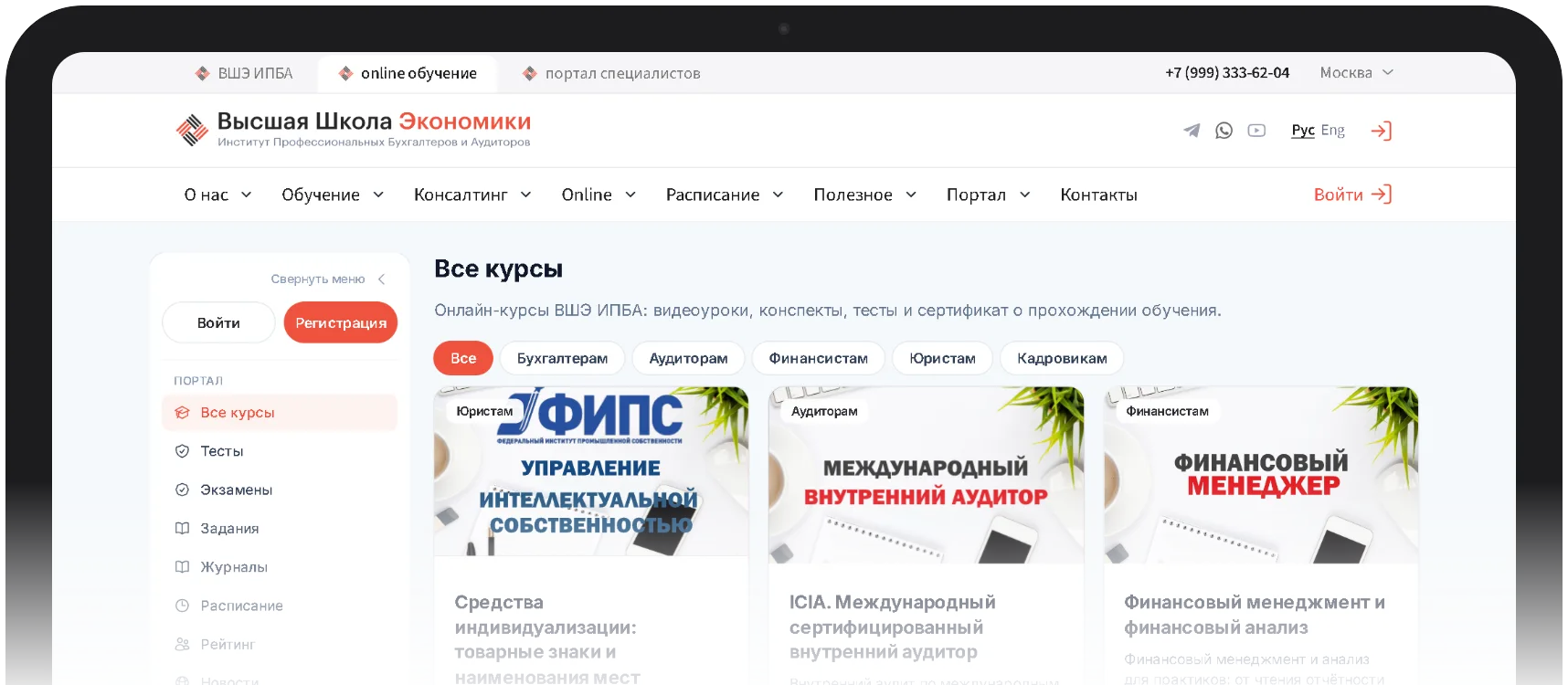
Удобная платформа для обучения
Личный кабинет с понятным интерфейсом: управляйте обучением, следите за прогрессом и общайтесь с преподавателями в одном месте.
Учебные материалы
Все лекции, презентации и задания в одном месте
Расписание занятий
Календарь с напоминаниями о ближайших занятиях
Прогресс
Успеваемость и выполненные задания
Видеолекции
Смотрите лекции в удобное время
FAQ about the Train the Trainer course
Who is the Train the Trainer course for?
New and practicing business trainers, in-house corporate trainers, HR specialists and anyone who leads group training and wants to make it more effective.
What does the program cover?
Day one is devoted to designing a training: needs assessment, program and script, group dynamics. Days two and three cover 20 business training methods, from mini-lectures and facilitation to role plays and sharing.
Are there practical sessions?
Yes, practice takes up about 80% of the time: participants try each method themselves, work in pairs and groups, and review their actions using video analysis.
How long is the course and what is the format?
The course lasts three days. During this time participants master the full training preparation cycle and 20 delivery methods.
What document do I receive after the course?
On completing the course, you receive an HSE IPAA certificate of completion.
Course price
40 000 ₽
Learn now, pay later!
4 888
₽/mo
3 833
₽/mo
Installments for 12 months
15%
Enroll in the course or get a free consultation
About the course
For experienced trainers, the program helps organize their knowledge, take an outside look at their own practice and expand their toolkit of methods.
For new trainers, the course lays the foundation of the profession: how to find out what the client really needs and choose a training format to match; how to write a training program and deliver it; how to manage group dynamics and work with an unmotivated or hostile group. The key question of the course for all participants is how to make a training engaging and useful for both the group and the client.
How the sessions work
The course is built on an interactive methodology: participants do not just listen, they work. We use mini-lectures, group discussions, moderation and facilitation, work in pairs and small groups, presentations, case analysis, business, role-playing and metaphorical games, video analysis, brainstorming, sociometry and sharing. The ratio of theory to practice is 20% to 80%.
Course program
Day 1. Designing a training
- Assessing a company's training needs: interviewing the client and clarifying goals and objectives; observing future participants at their workplaces; participant surveys; writing a program tailored to the company's request and the structure of a strong program; post-training activities.
- Training script.
- Competencies of a professional trainer.
- Group dynamics.
- Handling aggression in a group.
Days 2 and 3. Business training methods
- The first minutes of a training.
- Sociometry as a way to quickly assess a group.
- Mini-lecture: preparation, logic and structure of a talk, rhetorical techniques.
- Facilitation as a way to hold participants' attention; how to run it.
- Group discussion: which learning objectives it helps achieve and how to run it.
- Moderation as a way to build a shared understanding of key concepts within a group; how to run it.
- Topic-based exercises for skill practice: single-element and integrated.
- Brainstorming to generate new ideas and solutions; how to prepare a brainstorming session for a client's task on your own.
- Case studies: ready-made cases and where to use them, how to create and run your own case.
- Role play: rules and procedure, simple games and games with a hidden motive, instructions for participants, analysis of behavior in the game.
- Video analysis of participants' behavior in role plays and discussions.
- Metaphorical business game as a way to change participants' mindsets; how to run it.
- Pantomime in business training; how to run it.
- Tests in training: projective tests and questionnaires, administering them and processing results.
- Sharing to balance the group's emotional state. Closing the training: summing up, group feedback and recording results.
Upcoming dates are in the /schedule section; other programs for HR professionals and managers are in the /programs section.
Not sure which program to choose?
Our specialists will help you choose a program for your goals and answer all your questions. The consultation is free!
Reach us in one click: call us.
+7 (999) 333-62-04
contact us via messengers


