 HSE IPAA



Structured training
Key knowledge, practical examples and working review procedures in one course.
A practical course: analyzing financial misconduct, documenting evidence and preventing fraud.
 As scheduled
 Specified in the course program
 HSE IPAA certificate of completion

Master a consistent approach: identifying suspicious transactions, reviewing documents, recording evidence and preparing a professional report.
Key knowledge, practical examples and working review procedures in one course.

Analysis of accounting data and documents using a step-by-step review procedure.

Unusual transactions, duplicate payments, conflicts of interest and signs of data manipulation.

The ability to draw up a review plan, support your conclusions, state the limitations of the analysis and propose control measures.
 Structured knowledge of financial fraud schemes
Practical skills in analyzing accounting data
Step-by-step review procedures
Analysis of professional scenarios
Study materials and document templates
HSE IPAA certificate
Structured knowledge of financial fraud schemes
Practical skills in analyzing accounting data
Step-by-step review procedures
Analysis of professional scenarios
Study materials and document templates
HSE IPAA certificate
A practical program with instructor support and materials for self-study.

Examples and assignments help reinforce the material.

Classes are taught by practicing professionals.

Reflects Russian legislation and business practice.

The training can be combined with work.

Instructors answer questions about the program.

On completion, participants receive an HSE IPAA certificate of completion.
Investigative experience is not required. A basic understanding of financial documents, attention to detail and willingness to take part in practical assignments will be helpful.

Interest in financial analysis, internal control and preventing misconduct.

Willingness to discuss professional scenarios and work through case examples.

Independent study of course materials and document templates.

Finding discrepancies and preparing well-reasoned conclusions.
Early-career accounting and control specialists
Practicing accountants and auditors
Heads of finance departments
Lawyers, compliance and economic security specialists
Anyone who wants to deepen their professional knowledge
Seven sequential modules: red flags of fraud, accounting data analysis, review planning, evidence, employee interviews, reporting and prevention of misconduct.


39 500 ₽

Installments for 12 months
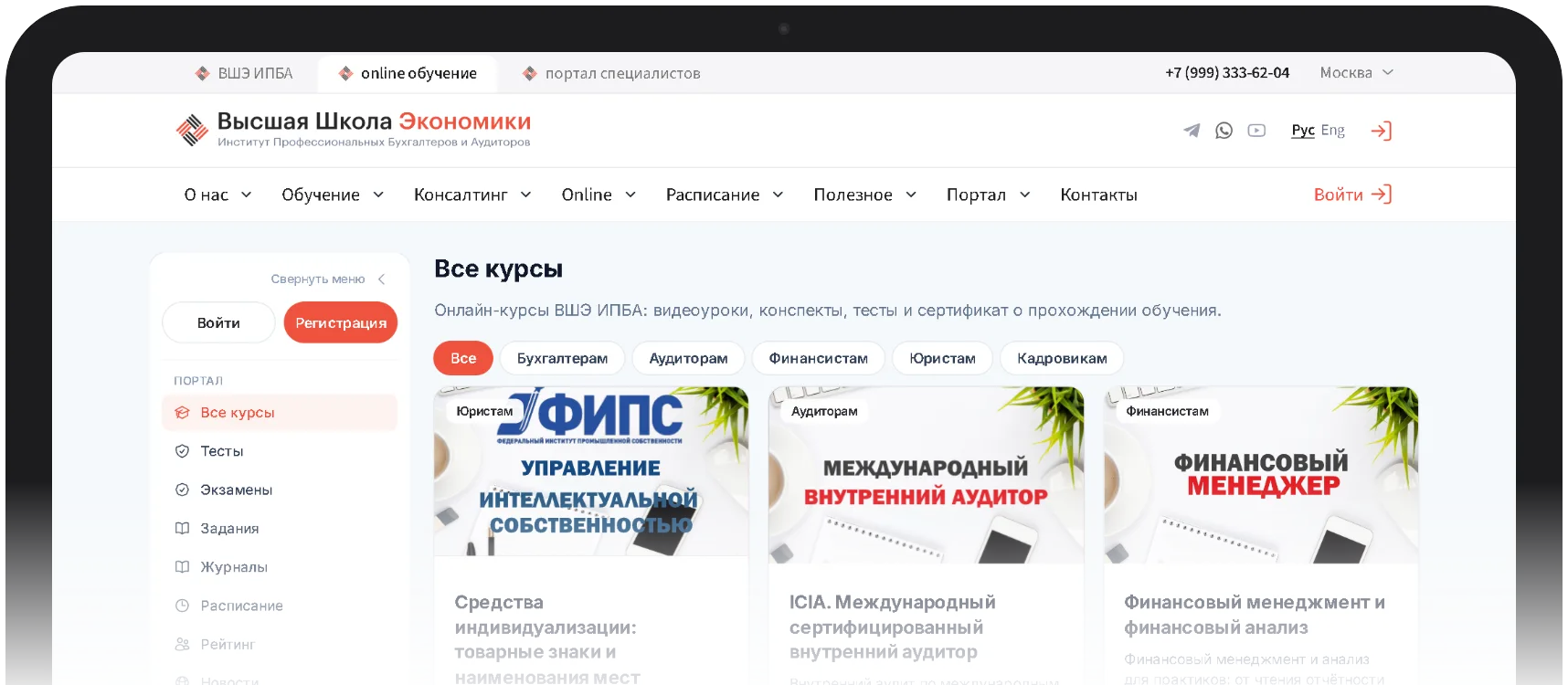
Личный кабинет с понятным интерфейсом: управляйте обучением, следите за прогрессом и общайтесь с преподавателями в одном месте.
Все лекции, презентации и задания в одном месте
Календарь с напоминаниями о ближайших занятиях
Успеваемость и выполненные задания
Смотрите лекции в удобное время
Accountants, internal auditors, compliance specialists, financial controllers, lawyers and managers responsible for the reliability of financial reporting and the safeguarding of assets.
Seven modules: from the red flags of fraud and analysis of accounting data to report preparation and prevention of misconduct. Each topic is reinforced with practical examples.
Online and in person, according to the group schedule.
An HSE IPAA certificate of completion.
Yes. The format and schedule allow you to combine classes with work.
39 500 ₽
Installments for 12 months
Forensic accounting combines accounting analysis, internal control and documentary examination methods. It helps identify unusual transactions, reconstruct the sequence of events and prepare well-supported conclusions about financial misconduct. The course is built around hands-on work with data and documents, taking into account Russian legislation and business practice.
Participants learn to distinguish an error from a possible intentional misstatement, understand which red flags call for further review, and structure their analysis without jumping to conclusions. Particular attention is paid to the quality of evidence, the preservation of source materials and the documentation of every step.
Knowing the red flags of fraud is not enough: you need to be able to structure a review so that your conclusions are backed by documents and clear reasoning. The course shows how to reconcile accounting records with contracts, source documents, bank transactions and management information. This approach makes it possible to separate a technical error from a deliberate misstatement and to identify what additional data should be requested.
A specialist must record the source of every piece of information, follow a consistent sequence of actions, check data for consistency and avoid unfounded assumptions. A good report is clear to management, auditors, lawyers and the compliance function: it sets out the facts, the limitations of the analysis and practical recommendations.
Forensic accounting is useful not only after a suspicious transaction has been discovered. The results of the analysis help strengthen internal control: segregate duties, streamline payment approvals, monitor changes to master data, define risk indicators and a response procedure. In this way, a one-off review becomes the basis for systematic fraud prevention.
Classes are built around professional scenarios and step-by-step procedures. Using examples, participants learn to formulate hypotheses, identify data sources, compare documents and record their findings. The course materials apply in accounting, audit, compliance, economic security and risk management.
After the course you will be able to organize an initial review of a suspicious transaction, draw up an analysis plan, identify key discrepancies and present your conclusions in a form management can easily understand. You will also learn to spot weaknesses in company processes and propose preventive measures: segregation of duties, access control, regular reconciliations and counterparty checks.
No investigative experience is required: what matters is attention to detail, willingness to work with documents and participation in practical assignments. On completion, participants receive an HSE IPAA certificate of completion. Dates of upcoming groups are in the schedule.
Our specialists will help you choose a program for your goals and answer all your questions. The consultation is free!


