 HSE IPAA



Civil Procedure Law
Pre-trial claims and litigation, handling cases in court, and alternative dispute resolution
 4 program modules
 Overview of legislative changes
 HSE IPAA certificate of completion
33 500 ₽
/course
26 000 ₽
/course

0
Seminar objective
The seminar systematizes knowledge of pre-trial claims, litigation and alternative dispute resolution, and covers challenging issues in applying the Russian Code of Civil Procedure and practical litigation skills.

Working with evidence

Appealing court rulings

Mediation and arbitration
What you will master
 Determining the subject matter and scope of claims
Assessing the risks of a counterclaim
Interim measures and how to apply them
Assessing evidence: relevance, admissibility, reliability
Specifics of writ and simplified proceedings
Preparing appeals and cassation appeals
Conducting mediation and concluding a mediation agreement
Determining the subject matter and scope of claims
Assessing the risks of a counterclaim
Interim measures and how to apply them
Assessing evidence: relevance, admissibility, reliability
Specifics of writ and simplified proceedings
Preparing appeals and cassation appeals
Conducting mediation and concluding a mediation agreement
Who the seminar is designed for
In-house lawyers regularly have to represent their organization in court.

Litigation skills
We cover case strategy and building a legal position.

Working with evidence
Burden of proof, the subject matter and elements of judicial proof.

Enforcement of court rulings
Protecting the client's interests at the final stage of a dispute.
Key procedural issues
We review the consequences of the parties' procedural actions.

Amending a claim
Procedural consequences of changing the grounds or subject matter of a claim.

Withdrawing and admitting a claim
Consequences of withdrawing a claim, admitting a claim and settlement agreements.

Case participants
Procedural rights of the parties and third parties.

Inadmissible evidence
Information that cannot serve as evidence and circumstances that need not be proven.
Who the training is for
In-house lawyers
Attorneys
Claims and litigation specialists
Heads of legal departments
Mediators
Contract specialists
Junior lawyers
Program content
Four modules and an overview of the latest changes in civil procedure law.

4
program modules

3
court instances

online
class format
- Writ and simplified proceedings, subject matter and scope of claims, counterclaim, interim measures.
- Assessing evidence, burden of proof, specific types of evidence, inadmissible information.
- Appeals and cassation appeals, review based on new or newly discovered circumstances.
- Concept and nature of arbitration, arbitration rules.
- Legal regulation in Russia, principles and stages, requirements for a mediator, professional ethics.
- Choosing a mediator, applicability criteria, rules of the procedure, mediation agreement, notary's enforcement endorsement.
Course price
26 000 ₽

Learn now, pay later!
3 210
₽/mo
2 492
₽/mo
Installments for 12 months
15%
Enroll in the course or get a free consultation
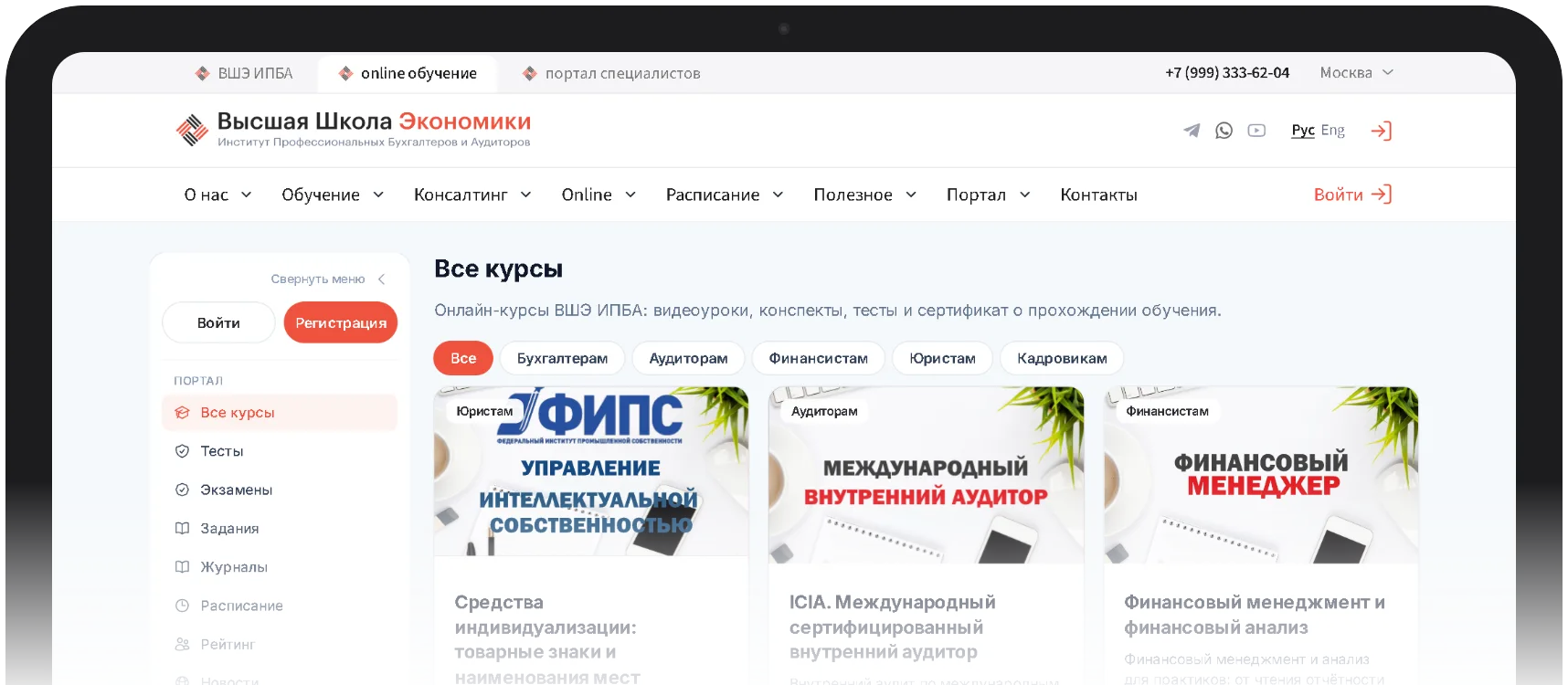
Удобная платформа для обучения
Личный кабинет с понятным интерфейсом: управляйте обучением, следите за прогрессом и общайтесь с преподавателями в одном месте.
Учебные материалы
Все лекции, презентации и задания в одном месте
Расписание занятий
Календарь с напоминаниями о ближайших занятиях
Прогресс
Успеваемость и выполненные задания
Видеолекции
Смотрите лекции в удобное время
FAQ about the Civil Procedure Law course
Who is the Civil Procedure Law course for?
In-house lawyers, attorneys, claims, litigation and contract specialists, heads of legal departments, mediators and junior lawyers who represent clients in court.
What does the program cover?
Four modules: claim, writ and simplified proceedings; evidence and proof; trial, appeal, cassation and review of rulings; mediation, arbitration and the notary's enforcement endorsement. Plus an overview of the latest legislative changes.
Are there practical sessions?
Yes. Theory is reinforced through practical cases and analysis of procedural situations so participants can apply their knowledge at work right away.
How long is the course and what is the format?
The program consists of four modules, and classes are held online. See the schedule for the dates of the next seminar.
What document do I receive after the course?
On completing the seminar, you receive an HSE IPAA certificate of completion. The terms of the final assessment are announced before classes begin.
Course price
26 000 ₽
Learn now, pay later!
3 210
₽/mo
2 492
₽/mo
Installments for 12 months
15%
Enroll in the course or get a free consultation
Current issues in civil procedure law
Seminar objective
The seminar systematizes knowledge in:
- pre-trial claims and litigation;
- alternative dispute resolution.
In-house lawyers regularly have to represent their organization in court. The seminar focuses on the most challenging issues in applying the Russian Code of Civil Procedure and on practical litigation skills: developing a case position, working with evidence, and protecting the client's interests at the enforcement stage.
The program includes an overview of the latest changes in civil procedure law.
Module 1. Claim proceedings and trial in the court of first instance. Writ proceedings and simplified proceedings
Determining the subject matter and scope of claims, assessing the risk of a counterclaim, deciding whether going to court is advisable.
- Statement of defense: content, format and filing procedure.
- Counterclaim and the conditions for its acceptance by the court.
- Interim measures: steps before filing an application, appealing a refusal to grant measures.
- Procedural consequences of changing the grounds or subject matter of a claim, withdrawing a claim, admitting a claim, and settlement agreements.
- Persons participating in the case and their procedural rights; third parties with and without independent claims.
Categories of cases heard in writ and simplified proceedings. Specifics and stages of hearing such cases.
Module 2. Evidence and proof in civil proceedings
The concept of evidence. Assessing evidence in terms of relevance, admissibility and reliability.
- Burden of proof, the subject matter and elements of judicial proof.
- Information that cannot serve as evidence and circumstances that need not be proven. Objections to the court's admission of evidence.
- Examination and assessment of specific types of evidence: witness testimony, documentary evidence (including electronic correspondence), expert opinions, specialist consultations.
Interactive work with participants on practical cases.
Module 3. Trial. Appeals and review of court rulings
- Trial: stages and procedures, closing arguments.
- Appeals: specifics of appealing particular types of court rulings, content and filing procedure for an appeal, response to an appeal, restrictions on submitting new evidence on appeal.
- Cassation appeals against court rulings that have entered into force: content and filing procedure for a cassation appeal.
- Review of court rulings based on new or newly discovered circumstances: grounds and procedure.
Module 4. Alternative methods of resolving civil and commercial disputes. Mediation. Notary's enforcement endorsement
Arbitration: concept and nature, arbitration rules.
Mediation. Legal regulation of mediation in the Russian Federation (Federal Law No. 193-FZ “On the Alternative Dispute Resolution Procedure Involving an Intermediary (Mediation Procedure)”). Areas of application, principles and stages of mediation. Requirements for a mediator, the mediator's role and functions, professional ethics, organization of work. Various schools and approaches in mediation, the understanding-based approach.
Parties' referral to a mediator and choice of mediator. Criteria for determining whether a dispute can be resolved through mediation. Rules of the procedure. Mediation agreement.
Notary's enforcement endorsement: conditions and procedure.
Not sure which program to choose?
Our specialists will help you choose a program for your goals and answer all your questions. The consultation is free!
Reach us in one click: call us.
+7 (999) 333-62-04
contact us via messengers


