 HSE IPAA



Accounts Receivable Management
A practical course on accounts receivable management and debt collection: how to prevent late payment, assess risks, negotiate with debtors and use legal tools to recover money.
 3 program blocks
 10–12 hours
 HSE IPAA certificate
23 000 ₽
/course
18 000 ₽
/course

0
Why manage accounts receivable
Accounts receivable make up a significant share of a company's assets. A debt not repaid on time reduces solvency and liquidity, forcing the company to borrow and scale back investment programs.

Company credit policy

Pre-trial work with the debtor

Court and enforcement proceedings
Program objectives
 Broader knowledge of accounts receivable management
Lower risk of overdue debt arising
Lower risk of debt going unpaid
Skills for working with debtors
A step-by-step process for handling overdue debt
Ability to draft claim letters to debtors
An understanding of compulsory collection methods
Broader knowledge of accounts receivable management
Lower risk of overdue debt arising
Lower risk of debt going unpaid
Skills for working with debtors
A step-by-step process for handling overdue debt
Ability to draft claim letters to debtors
An understanding of compulsory collection methods
Program highlights
The program brings together the approaches of risk management, financial analysis, the security department, lawyers and the sales team.

Interdisciplinary approach
Practical solutions that apply to any type of receivable.

Business game
Negotiating with a debtor is practiced hands-on.

Group work
Working together to find ways to collect debt.
Collection tools
We cover the entire life of a debt, from negotiations to enforcement proceedings.

Pre-trial stage
Negotiations, correspondence, claim letters and debtor motivation.

Restructuring
Civil-law ways to settle overdue debt.

Court stage
Writ and simplified proceedings, interim measures, proof.

Enforcement proceedings
Working with the FSSP of Russia and banks, deadlines and procedures.
Who the training is for
Company executives
Debt management specialists
Lawyers
Accountants
Procurement and contract specialists
Collection agency employees
Security department specialists
Training program
Three blocks: introduction, the main practical part, and conclusions.

3
program blocks

2
practical formats: game and group work

online
class format
- Why the topic matters, classification of accounts receivable, causes of debt, organizing receivables management.
- Contract terms, verifying the counterparty's status and documents, assessing its actual financial position.
- Communicating with the debtor, business game, claim letters, positive and negative motivation methods.
- Amending and terminating the contract, civil-law ways to settle overdue debt.
- Arbitration and mediation, writ and simplified proceedings, interim measures, proof.
- FSSP of Russia and banks, collection agencies, debtor bankruptcy, secondary liability; participants' final summary.
Course price
18 000 ₽

Learn now, pay later!
2 204
₽/mo
1 725
₽/mo
Installments for 12 months
15%
Enroll in the course or get a free consultation
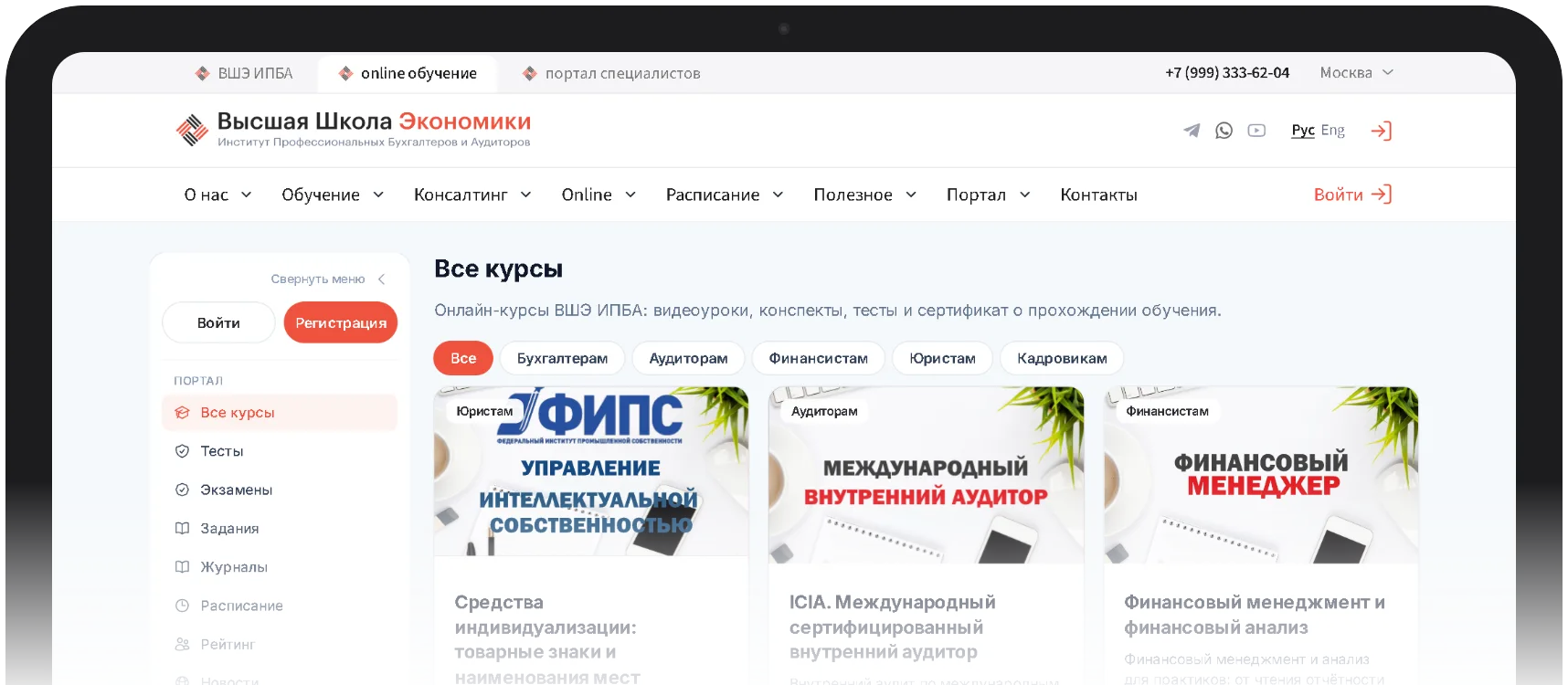
Удобная платформа для обучения
Личный кабинет с понятным интерфейсом: управляйте обучением, следите за прогрессом и общайтесь с преподавателями в одном месте.
Учебные материалы
Все лекции, презентации и задания в одном месте
Расписание занятий
Календарь с напоминаниями о ближайших занятиях
Прогресс
Успеваемость и выполненные задания
Видеолекции
Смотрите лекции в удобное время
FAQ about the Accounts Receivable Management course
Who is the course for?
Managers and specialists responsible for accounts receivable and debt collection, as well as lawyers, accountants, procurement staff, contract specialists and collection agency employees.
What does the program cover?
Classification and causes of debt, credit policy, preventing late payment at the contracting stage, pre-trial work with the debtor, debt restructuring, collection through the courts, enforcement proceedings and non-standard ways to recover debt.
Are there practical sessions?
Yes. The program includes the business game "Negotiating with a Debtor," individual drafting of claim letters, group work and group discussion of participants' experience.
How long is the training?
The program consists of three blocks and lasts 10–12 hours.
What document do I receive after the course?
On completing the course, participants receive an HSE IPAA certificate of completion.
Course price
18 000 ₽
Learn now, pay later!
2 204
₽/mo
1 725
₽/mo
Installments for 12 months
15%
Enroll in the course or get a free consultation
A professional development program for specialists who manage accounts receivable and handle debt collection.
Accounts receivable make up a significant share of any company's assets. A debt that is not repaid on time means more than losing the amount itself: it reduces solvency and liquidity, forces the company to borrow and scale back investment programs, and in severe cases leads to bankruptcy.
That is why receivables management should be part of every company's policy. The creditor's task is to reduce the likelihood of late payment in advance and, if it does occur, to recover the debt as quickly as possible.
The seminar brings together the approaches of risk management, financial analysis, the security department, the legal department and the sales team to build a complete picture of debt management. The solutions discussed apply to virtually any type of receivable.
The program is designed for managers and staff who deal with receivables and collection, as well as other interested specialists: lawyers, accountants, procurement staff, contract specialists and collection agency employees.
Program objectives
- Expand knowledge of accounts receivable management.
- Reduce the risk of overdue debt arising and remaining unpaid.
- Develop skills for working with debtors and overdue debts.
- Build a step-by-step process for working with debtors.
Program
Block 1. Introduction
- Why the topic matters.
- Classification of accounts receivable.
- Causes of debt.
- Organizing receivables management: credit policy.
Block 2. Main part
- Group discussion: how participants' companies handle receivables — problems, what to watch for, how to work with debtors.
- Preventing overdue debt:
- at the contracting stage — when drafting terms and verifying the counterparty's status and documents;
- assessing the counterparty's actual financial position.
- Pre-trial work with overdue debt:
- communicating with the debtor: in-person meetings, negotiations by phone and other means, correspondence; overall tactics and rules of communication;
- business game "Negotiating with a Debtor";
- individual assignment: drafting a claim letter and notices to the debtor;
- motivating the debtor to repay: positive and negative methods within the law, including informing counterparties about unfulfilled obligations;
- group discussion of ways to motivate the debtor;
- amending and terminating the contract;
- debt restructuring: civil-law ways to settle overdue debt;
- group work: methods of debt collection.
- Court stage of collection:
- alternatives to state courts: arbitration, mediation;
- general issues of debt collection through the courts;
- expedited procedures: writ proceedings and simplified proceedings;
- interim measures;
- evidence and proof: types of evidence, allocation of the burden of proof.
- Enforcement proceedings: working with the Federal Bailiff Service (FSSP of Russia), submitting a writ of execution directly to a bank, deadlines and procedural issues.
- Non-standard collection methods: collection agencies, interaction with tax authorities, criminal-law mechanisms, initiating the debtor's bankruptcy.
- Property that is exempt from enforcement.
- Who else can be held liable for the debt: the debtor's legal successors, liability of directors and members, secondary (subsidiary) liability for the debtor's obligations.
- The role of security for performance of obligations in collection: traditional and non-traditional instruments.
- When collection is impossible: termination of the obligation.
Block 3. Conclusions
- Participants prepare a debt collection summary based on their own experience.
- Q&A and discussion.
Duration: 10–12 hours.
Not sure which program to choose?
Our specialists will help you choose a program for your goals and answer all your questions. The consultation is free!
Reach us in one click: call us.
+7 (999) 333-62-04
contact us via messengers


